




Green is Our Gold
Green is our Gold is a shared vision for sustainable tourism that aims to inspire the protection of Australia’s natural wonders, vibrant cultures, and local communities.
Sustainable tourism

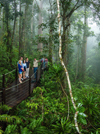
Cradle Mountain-Lake St Clair National Park, Northern Tasmania © Tourism Australia
Sustainable tourism protects Australia’s natural and cultural assets, and respects local communities. It is essential to the long-term success of the tourism industry.
By balancing economic prosperity alongside the needs of protecting our environment, culture and communities, sustainable tourism ensures Australia’s natural wonders, cultures and communities can be enjoyed by future generations.
Research shows there is a growing traveller demand for experiences that deliver positive social and environmental impact. Tourism Australia’s Consumer Demand Project (CDP) research of international holiday makers shows that sustainability is increasingly important to travellers, both in their everyday lives (77 per cent) and in the way they choose to travel (70 per cent).
There is also a continued demand for sustainable practices amongst international business events decision makers. Business Events CDP research shows that three out of four incentive decision makers (76 per cent) rank sustainability credentials as a significant driver of destination choice.

Tourism Australia places great importance on respecting and protecting the cultures, landscapes and wildlife that are integral to Australia’s appeal as a destination. We recognise that balancing growth, whilst protecting and enhancing our natural environment, nurturing our diverse cultures, especially those of our First Nations peoples, and empowering local communities, socially and economically, is key to a sustainable and prosperous future for Australia’s tourism industry.
We have developed a Sustainability Framework to provide clarity on Tourism Australia’s role in advancing sustainability across the visitor economy and to provide transparency in how sustainability is embedded across our activities. It follows the development of the National Sustainability Framework for the Visitor Economy and articulates how we will support the collective industry vision for Australia to be a world leader in sustainable tourism.
The National Sustainability Framework for the Visitor Economy and Sustainable Tourism Toolkit have been jointly developed by the Australian Government, and State and Territory governments. These resources, designed specifically for the visitor economy, seek to bring participants together behind a consistent approach to sustainable tourism in Australia.
Businesses already implementing sustainability practices may consider undertaking formal training or seeking formal recognition by getting certified for their practices. There are many certification schemes available to tourism businesses in Australia, along with pre-certification benchmarking tools. Some are designed specifically for tourism businesses, while others apply across many industries.
Tourism-specific programs
Other sustainability programs
Businesses with existing sustainability plans in place who want to communicate their sustainability efforts are encouraged review the ACCC’s Making Environmental Claims: A Guide for Business.
Those that undertake commercial practices in the European Union (EU) are required to follow specific rules when marketing to EU consumers. Tourism Australia partnered with Austrade and State and Territory Tourism Organisations to develop an overview of the 'Empowering Consumers for the Green Transition’ Directive to support the Australian tourism industry understand the Directive and continue telling sustainability stories with confidence. Download the Overview on the EU Directive to learn more.
For further practical advice on sharing sustainability messaging with clarity and confidence, Tourism Australia partnered with EarthCheck in 2024 to develop dedicated guides for tourism and hospitality operators, as well as destinations.
Green is Our Gold is a sustainability initiative for the Australian tourism industry led by Tourism Australia. It is an industry-wide rally cry to protect the environments, cultures, and communities that make Australia a world-class destination.
All Australian tourism businesses are invited to join the Green and Gold Promise, committing to the collective industry vision for sustainable tourism as outlined in our National Sustainability Framework for the Visitor Economy.
Those that join will gain access to a toolkit with five simple principles designed to shape responsible visitor behaviour and practices.
Read about some of Australia’s great tourism operators and storytellers who are committed to sustainability:
 Arkaroola Wilderness Sanctuary, SA
 Barragunda Dining, VIC
Budj Bim Cultural Landscape, VIC
Cullen Wines, WA
Ethical Adventures, NT
Karijini Eco Retreat, WA
Lady Elliot Island, QLD
MCG, VIC
Reef Unlimited, QLD
Reveling Australia, QLD
Rumi on Louth, SA
Sydney Opera House, NSW
Tasmanian Walking Company, TAS
Thredbo Resort, NSW
Thunderstone Aboriginal Cultural Services, ACT
YHA Australia, NAT
Barragunda Dining, VIC
Budj Bim Cultural Landscape, VIC
Cullen Wines, WA
Ethical Adventures, NT
Karijini Eco Retreat, WA
Lady Elliot Island, QLD
MCG, VIC
Reef Unlimited, QLD
Reveling Australia, QLD
Rumi on Louth, SA
Sydney Opera House, NSW
Tasmanian Walking Company, TAS
Thredbo Resort, NSW
Thunderstone Aboriginal Cultural Services, ACT
YHA Australia, NAT