Aboriginal and Torres Strait Islander tourism
Aboriginal and Torres Strait Islander cultures and traditions are part of Australia’s history and form an integral part in how Tourism Australia tells the nation’s story.
Celebrating Australia’s Living Indigenous Languages

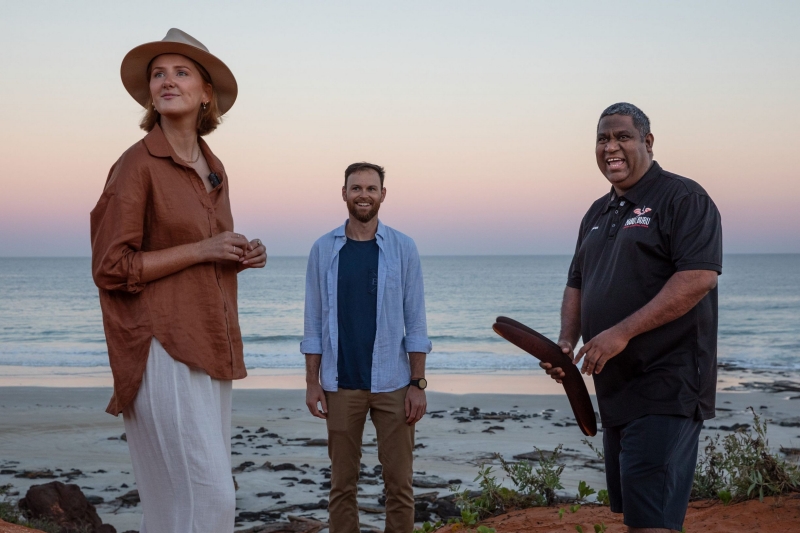
Durack, Kimberley, Western Australia © Tourism Australia
On International Mother Language Day (21 February 2026), Discover Aboriginal Experiences shines a light on the extraordinary diversity and resilience of Australia’s Aboriginal and Torres Strait Islander languages – one of the richest linguistic landscapes on Earth, and one that continues to be actively protected, taught and revitalised by communities across the country.
Before colonisation, more than 250 distinct Aboriginal and Torres Strait Islander languages were spoken across Australia, many with multiple dialects. Today, fewer than 150 Indigenous languages remain in daily use, with dozens the focus of determined community-led efforts to revitalise, strengthen and pass them on to future generations.
Language is far more than words. It carries cultural knowledge, law, history, humour, Songlines and deep relationships to Country. Across the Discover Aboriginal Experiences collective, language is shared in meaningful ways – spoken on Country, woven into storytelling, place names, song and ceremony, and taught through immersive, Aboriginal-guided tourism experiences that prioritise cultural authority and integrity.
Language is shared on every tour in ways that are natural, contextual and deeply connected to place. Whether it’s a spoken Welcome to Country, learning the original names of landscapes or hearing plant and animal names in language, visitors are immersed in living languages across Australia.
On North Stradbroke Island / Minjerribah in Queensland, Elisha Kissick of Yura Tours welcomes guests in Jandai, the language of the Quandamooka people, grounding every experience in the words and expressions that belong to Country. In Bundaberg, Taribelang Bunda Cultural Tours begins experiences with a Welcome to Country delivered in Taribelang language, reinforcing cultural authority and continuity. At Mossman Gorge Cultural Centre in Far North Queensland, visitors walking through the world’s oldest rainforest learn the names and uses of native plants in Eastern Kuku Yalanji language, deepening understanding of Country through language-rich storytelling.
In the Northern Territory, SeaLink NT’s experience on the Tiwi Islands introduces visitors to Tiwi language as part of cultural experiences that explore art, ceremony and everyday life on Country. Hearing language spoken by Tiwi guides reinforces the strength of one of Australia’s most distinctive living cultures, where language, identity and creativity remain tightly interwoven.
In Western Australia’s Kimberley, the Injiid Marlabu Calls Us experience at El Questro invites guests to listen, reflect and connect through song and spoken language. Led by Traditional Custodians, the experience includes singing and blessings in language, offering a powerful reminder that language is not only spoken, but felt – carried through voice, rhythm and ceremony on Country.
“Language is at the heart of who we are,” says Nicole Mitchell, Executive Officer, Discover Aboriginal Experiences. “When visitors join an Aboriginal-guided experience, they’re not just learning about a place – they’re hearing the words, sounds and stories that belong to that Country. Supporting language revival means supporting culture, identity and community wellbeing.”
One of the most powerful examples of language revitalisation in action is Gumbaynggirr Giingana Freedom School, Australia’s only Aboriginal language school. Based in New South Wales, the establishment teaches Gumbaynggirr language through a full curriculum, led by community and grounded in Country.
Giingana School founder Clark Webb is also the operator of Wajaana Yaam Gumbaynggirr Adventure Tours, a Discover Aboriginal Experiences member offering cultural experiences that immerse guests in Gumbaynggirr language, stories and knowledge on Country.
“Language holds our worldview,” says Webb. “When you revive a language, you’re not just bringing words back – you’re restoring knowledge systems that have been carried for tens of thousands of years. Sharing language through education and tourism helps ensure it stays strong, relevant and lived, not locked away.”
Editor’s Note:
The Discover Aboriginal Experiences collective is part of Tourism Australia’s Signature Experiences of Australia program that promotes outstanding tourism experiences within a variety of special categories. This collection showcases a diversity of experiences delivered by the world’s oldest living cultures, creating memorable trips for adventure seekers, culture enthusiasts, foodies and nature lovers, ranging from exploring hidden rock art galleries to foraging for native delicacies, stand-up paddleboarding on culturally significant waterways to bedding down at wilderness lodges in serene natural settings. Each member of this collection is considered a world-class leader in Aboriginal tourism, representing local Aboriginal cultures with integrity and authenticity.
Find out more about the Discover Aboriginal Experiences collective via our website. From the website you can access a dedicated trade and media portal, replete with a media kit packed with story ideas, interviews, Discover Aboriginal Experiences resources and more. Keep up to date and be inspired via our Connect to Country digital magazines, and explore operator experiences in detail in our 2026 Brochure.
A collection of royalty-free Aboriginal tourism images and video are available here. Please search for Discover Aboriginal Experiences in the Resources section.
For media enquiries, contact:
Nicole Mitchell – Tourism Australia
Executive Officer Discover Aboriginal Experiences
M: +61 410 499 525
E: nmitchell@tourism.australia.com
W: discoveraboriginalexperiences.com
Julie Earle-Levine – North America
PR for Discover Aboriginal Experiences
E: Julie@julieearle.net